The Kitchen Spoon Isn't a Measuring Device: A Parent's Guide to Getting the Dose Right

Photo by Photo by Towfiqu barbhuiya on Unsplash on Unsplash
It is 2:14 in the morning. Your six-year-old is running a fever, the bottle says 5 mL, and the only clean thing within reach is a teaspoon from the drawer. You pour, you eyeball, you tell yourself close enough is close enough.
Usually, it is. Occasionally, it is not — and that is the entire reason this article exists.
Nobody needs a lecture about the 2 a.m. version of themselves. Every parent has met that person. But there is a real, measurable gap between what the label says and what actually ends up in a small body, and most of that gap comes from a handful of habits that are easy to fix once you notice them.
The scored line is not a promise
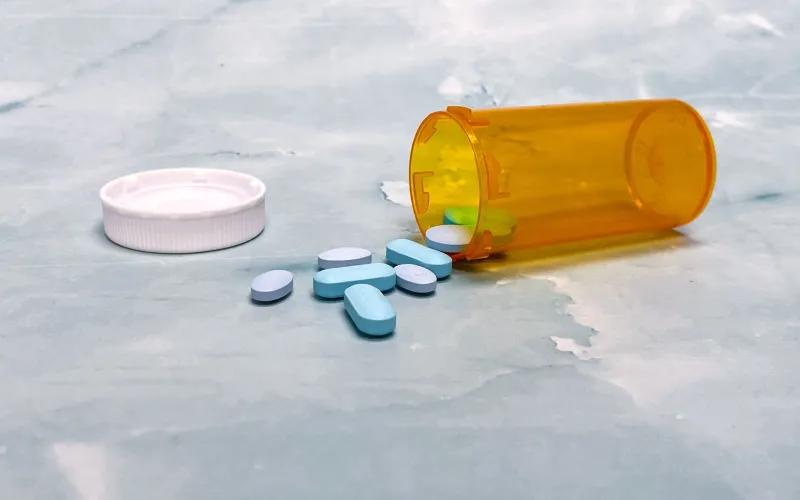
Half a tablet sounds simple. In practice, tablets do not always break where the line says they will. Surveys have found that roughly half of parents who split pills admit the halves do not come out even, and lab testing backs that up. Halves that differ by 10, 20, even 30 percent are common, especially with small tablets and stiff coatings.
For a 40-pound child on a medication with a narrow margin, a 25 percent swing in a dose is not a rounding error.
Scored tablets are designed to be split; unscored ones generally are not. If the pill has no line, call the pharmacist before you reach for a knife.
The pills that should never be broken
Extended-release and long-acting formulations — the ones with ER, XR, SR, XL, CR, LA, or CD after the name — are engineered to release medicine over hours. Crush or split one and you can dump hours of medicine into a child's bloodstream at once. Enteric coatings, designed to survive stomach acid, have the same problem.
Capsules are their own category. Some can be opened and sprinkled onto applesauce, but only when the pharmacist or prescriber confirms that the specific product allows it. Ask. Every time. It takes a minute.
Milliliters are not teaspoons
Here is the thing that surprises a lot of parents: a teaspoon from your kitchen drawer can hold anywhere from 3 to 7 mL. The label says 5 mL. That is a swing of nearly 40 percent in either direction, and for a toddler-sized body, it matters.
Household spoons are for soup. Milliliters get measured in something with mL markings — a dosing cup, a dosing spoon, or best of all, an oral syringe.
The cup in the box may not be helping
Dosing cups are better than spoons, but they are not all accurate. Testing has found some printed cups off by 20 percent or more, and a few with markings that do not match the label on the bottle at all. If the syringe that came with the prescription has faded numbers, or the cup in the drawer is from a different product, do not improvise.
One more: droppers are matched to specific products. The dropper from the infant acetaminophen does not deliver the same volume as the dropper from the infant ibuprofen. Keep each one with its own bottle.
Measure like you mean it
Small mechanical habits that cut down on errors: measure over a table, not the sink, so a spill means a redo instead of a guess. Set the cup or syringe on a flat surface and read the line at eye level. Draw liquid to the mark, then check it again after the air bubbles settle. If you are splitting a tablet, use a proper splitter — and if the halves crumble, do not try to eyeball the crumbs.
What to ask the pharmacist for — free
At most US pharmacies, you can ask for an oral syringe with the correct markings for your child's dose, and it is usually free or a dollar or two. Ask them to draw the dose once and show you. Ask whether the tablet can be split, and if it can, whether a different strength exists so you do not have to split at all.
Also worth asking: whether the medicine can be mixed with a small amount of food or drink, and whether timing matters relative to meals. Those details rarely make it onto the bottle.
The fix-it list
If you are splitting with a knife — ask about a different strength or a liquid formulation first.
If you are using a kitchen spoon — keep a labeled dosing syringe in the same drawer as the children's medicine and use only that.
If you are eyeballing 'about half' — a five-dollar pill splitter is more accurate than freehanding it.
If you are reusing a cup from a different bottle — ask the pharmacist for a matched one.
If the label says mL and you are thinking in teaspoons — do the conversion once, write it on the bottle in marker, and then stop converting.
One last thing
Accuracy is not about being a perfect parent at 2 a.m. It is about removing the guesswork ahead of time, in daylight, when you have both hands free and a pharmacist is a phone call away. The goal is not a spotless routine. The goal is that when the fever hits, the dose is one less thing to worry about.